Tuesday, January 12, 2016

The Science Of Motivation

Image source: stacksandstacks.com
Learning how to motivate one’s self can now be done through science. Modern techniques and strategies no longer rely on hearsay but are backed by years of research and data. Neurologists and psychologists have studied the science of motivation and how emotions affect and are affected by the different areas of the brain.

An interesting finding is that when the brain has to compete between thought and emotion, it is the latter that usually wins. Research found that fighting one’s feelings makes one even stronger. For example, when people are told something unhappy and are instructed not to feel sad about it, these individuals report feeling worse than people who are not told how to feel about the particular event or situation.

Knowing the unavoidable power of feelings play a crucial role in motivating one’s self. Scientists have found that procrastination usually comes when a person is in a bad mood. Medical studies suggest that negative emotions greatly constrict mood and reasoning. That is, when people feel negative emotions, they are more likely to procrastinate. Happiness, on the other hand, was shown to increase productivity.

Image source: oplife.com
Another helpful strategy is optimism. It was found that this greatly increases motivation and furthers progress. Neurologists suggest monitoring one’s progress and celebrating each milestone – even the little ones. These small steps have been seen to increase optimism, enhance happiness, and improve productivity.

Psychologists assert that these small shifts in thinking significantly impact how a person perceives the world and in turn, how he or she is motivated to do whatever the assigned task.

Robert Channing is a renowned motivational speaker. Learn more when you follow this Twitter account.

Friday, November 6, 2015

Pay it forward: Finding Success by Helping Others

In his article, Jeff Israel Nthiwa, a transformational life coach, writes: Whenever you design your strategic plans to make huge difference in many lives by your divine gifts, then you can transform your personal, financial, professional and spiritual life to next level.”

http://cdn.muscleforlife.com/wp-content/themes/mfl/tim/timthumb.php?src=http://cdn.muscleforlife.com/wp-content/uploads/2014/08/helping-others.jpg&w=640&q=85
Image source: www.muscleforlife.com

Throughout history, from business and politics to sports and the arts, people with successful careers have all shared the experience of helping others. As leaders in their fields, part of their success comes from helping other people succeed.

In his book, “Give and Take: Why Helping Others Drives Our Success,” management and psychology professor Adam Grant cites several studies on how helping others can yield long-term benefits to a person. From a relationship and motivation perspective, “givers” are proven to build deeper and broader connections with other people, helping them enrich the meaning and purpose of their lives. But beyond relationships and motivation, volunteerism also helps people acquire new knowledge and skills from their experience.

Think about it, at one point in a person’s life, he or she has become successful through the help of someone. And in the process, those who have helped others succeed are also helping others to achieve something in life.

https://bruceandsallywitt.files.wordpress.com/2011/12/mp900386795.jpg
Image source: bruceandsallywitt.wordpress.com

Remember, if you invest your time and effort in others, chances are, they also investing in you.

Robert Channing is a world-renowned psychic entertainer, mentalist, motivational speaker, and philanthropist, who has helped earn over $150 million for charities worldwide through his performances. Follow this Twitter account to learn more about his activities.

Monday, August 31, 2015

Spellbound: Three Unorthodox Types of Modern Visual Arts

Image sourceimaginationintoart.com
Art is a continuously evolving aspect of life. The possibility of developing new art forms is immense and perhaps, endless. Painting and sculpture have been the mainstays of the industry but later developments, such as film and electronic music, have proven to be as important. These days, it is no longer surprising to witness unconventional art. Some are avant-garde, others are completely original. Regardless, they are all very impressive and deserve generous appreciation. Below are three relatively new art forms that will absolutely leave one in awe:

Speed painting. Speed painters, whether working on a digital or traditional platform, have to finish their project on a limited time. This makes this form of performance art intriguing and very exciting. The time constraint requires efficient rendering of form and detail, and painters have to demonstrate full mastery of whatever medium they use.

Image sourceinspirationfeed.com
3-D street painting. Today’s sidewalk art displays are increasingly realistic. While this form of art has already existed for centuries, 3-D variants are relatively new. The use of 3-D techniques makes the works even more astonishing, and 3-D street artists worldwide are working hard to make this niche art more popular and accessible by hosting annual festivals.

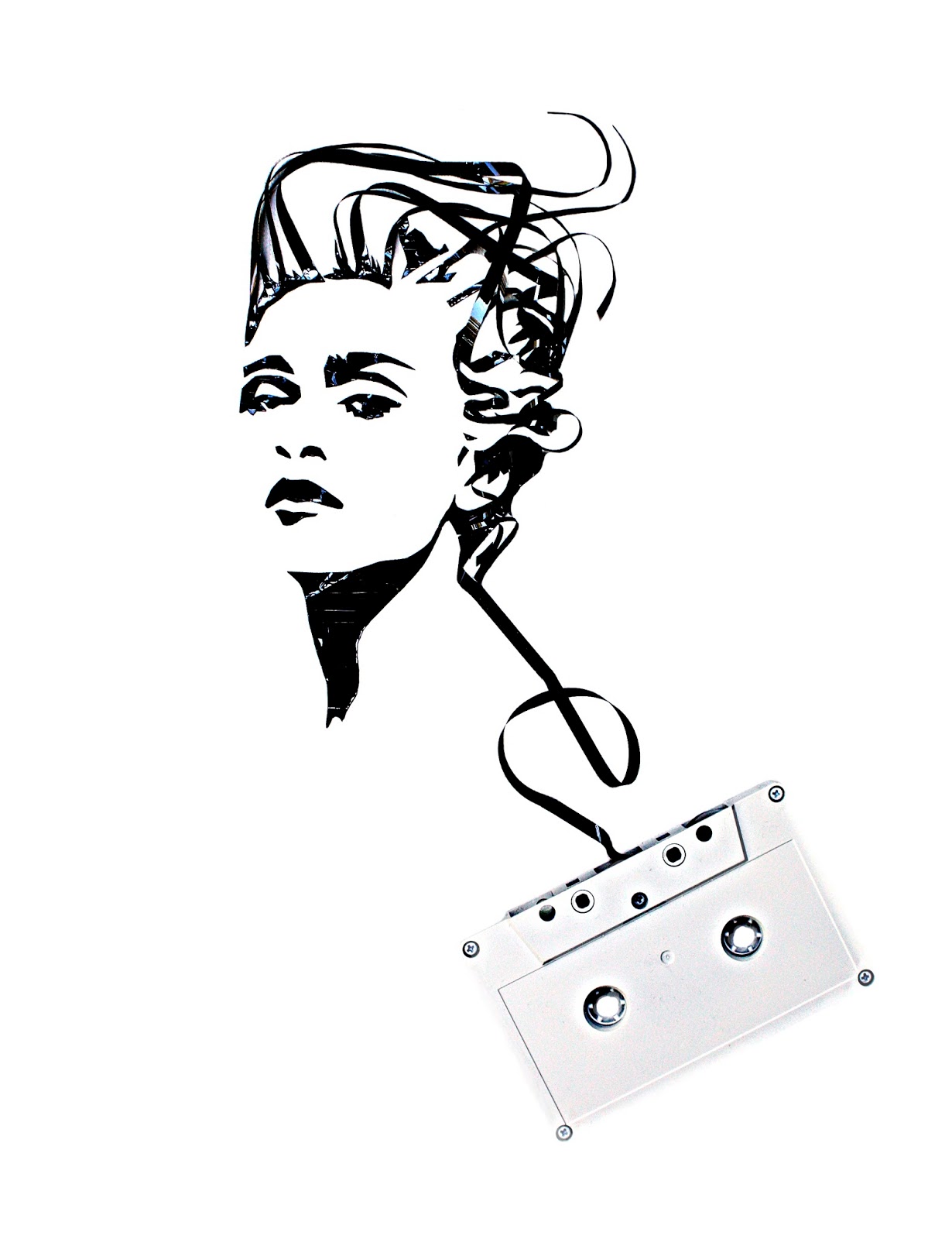
Cassette Art. Perhaps, Erika Iris Simmons is the most well-known artist to use the now-obsolete audio cassette tapes in “sketching” pop icons such as John Lennon, Madonna, and Marilyn Monroe. Her portraits are renowned worldwide and have already received millions of views in the Web through photo-sharing sites.

For more spellbinding stories, masterpieces, and performances, visit acclaimed speed painter and entertainer Robert Channing’s official website.

Tuesday, July 21, 2015

More Than Just an Outlet: Using Art and Entertainment for Charity

The world of the arts is colorful. And within this world are many artists, themselves colorful and interesting personalities, who use their talents to make a positive impact on others.

Jeff Hanson is one of these artists. Based in Overland Park, Kansas, Jeff is visually impaired from an optic nerve tumor caused by neurofibromatosis, a genetic disorder. The tumor caused severe vision loss in 2005, but that didn’t stop him from creating wonderful artworks.


Despite his vision loss, Jeff has succeeded in making a name for himself as a painter, with about 1,400 paintings in his portfolio and patrons that include celebrities Elton John, Warren Buffett, and Susan Sarandon. This success enabled him to reach out to lots of people through philanthropy. At the young age of 21, he has already donated one million dollars to over 100 charities worldwide, including the Make-a-Wish Foundation and the Children’s Tumor Foundation.

 Image source: Tallyshed.com

The same passion for philanthropy resonates within Robert Channing. Channing is a professional speed painter who performs for charitable events to help his clients raise money for their causes. A certified entertainer, he wows his audience as he creates astonishing glitter portraits of well-known personalities, rendered rapidly. At these events, his unique artworks are auctioned off. His talents have already helped raise $150 million for various charities in the United States.

Visit ImaginationIntoArt.com for more information about Robert Channing and his artworks.

Wednesday, February 11, 2015

The essential characteristics of a mentalist

Awe, wonder, excitement! All these are indicators that one has just witnessed something magical, something unbelievable, something that leaves the mind thinking about greater possibilities, something that would even become a conversation starter for weeks or so, as the mentalist does it again – engaging people with his performance and confidently encouraging his audience to believe what they just saw.

Image Source: eboosmagic.com

Mentalism is a technique of decoding the inscrutable human mind to understand the unspoken. It refers to the reading of a person’s mind with one’s intuitive abilities. Although mind reading is deemed to be a rare skill because of its sophisticated and complex nature, masterful execution is possible through years of training and experience.

Image Source: freemagicschool.com

In the performance and delivery of his piece, a mentalist stands out from his unique acts, serving as his distinct characteristic. Being consistently believable ensures the satisfaction of the audience from both the performance and the performer. In addition, the mentalist is can tailor his repertoire to his audience’s reactions, enthusiasm, and engagement. Specifically, the mentalist boosts his performance by:

1. Focusing on the audience and being captivating enough to hold their interest;

2. Invoking the power of persuasion, employing clarity, and engaging the audience;

3. Making the act personal and relevant, ensuring that the performance not only boggles the mind but touches the heart and soul, too; and

4. Sharing a magical moment with the crowd and suspending disbelief.

Image Source: bacuseventos.com

It is the goal of a mentalist to create an experience that the audience remembers for a long time. Just as magicians undergo intense preparations for a compelling show, mentalists, too, spend years of training to understand fully the workings of the human mind.  

Robert Channing is a world-renowned psychic entertainer and mentalist. Check out this website for Mr. Channing shows and performances.

Wednesday, November 5, 2014

Magic in the big screen: Three great films about performance magic

Performance magic has been around for centuries and has been captivating audiences from around the world. From simple and complex tricks to optical illusions, this art form never fails to entertain all kinds of viewers. Because of this mystique, Hollywood has tried to capture the allure of the performance. The following are notable films that critics and viewers believe have succeeded with the hat tricks:  


Image source: Crazymelatube.com

The Prestige (2006)
 Based on the award-winning novel by Christopher Priest, The Prestige centers on the rivalry between two magicians, Robert Angier and Alfred Borden. Once partners, the two become bitter enemies after Angier blames Borden for his wife’s death during a performance. They both begin to sabotage each other’s tricks, which lead to deadly consequences.  

 Image source: Downloadmoviesfreee.org

The Illusionist (2006)
This is the story of Eisenheim, a master illusionist, and the great lengths he went through to be with the woman he loves. Eisenheim is a son of a peasant who, as a teenager, falls in love with Sophie, a duchess. After being forced to go their separate ways, they meet again as adults, with Eisenheim as a famous magician and Sophie engaged to an abusive crown prince. The two then devise a grand magic trick that would allow them to finally be together.  

 Image source: Mcdanielfreepress.com

Now You See Me (2013)
A team of illusionists known as The Four Horsemen are led by a mysterious mastermind to commit bank heists in front of a big audience using magic tricks, after which they would give the stolen money to the viewers. This gets the attention of FBI and Interpol agents who decide to investigate on the magicians.

Performance magic, whether in film or in reality, never fails to capture viewers’ attention. Thus, it wouldn’t be a surprise if the art form endures for a long time.  

A celebrated speed painter and mentalist, Robert Channing continues to mesmerize audiences with each performance. Visit his website to learn more about his work.

Saturday, October 25, 2014

Painting without paint? Utilizing unconventional art media

Not all artists are content using tried and tested media for expression. Different media pose unique challenges for the risk-taking artist who wants to tread into territory, with each medium offering its own set of application and effects. This of course leaves a lot of room for experimentation, one that the intrepid visual artist, modernist or representational, would be more than happy to take on.

Here are just a few of the odd media used in visual art that have been used to some degree of success.  
Toast

Image Source: artaic.com

Finding images in food is nothing new, due to the tendency of humans to recognize patterns. Artist Maurice Bennett takes this a step further, creating or reproducing several masterpieces from patterns using the contrast of light and dark shades in toast. Like-minded artist Hittomii from Japan has also used toast as a medium, drawing anime images into toast using pigments like cocoa and tea powder.  

Glitter

Image Source: diondior.com

Usually seen as an accessory, glitter can be used as a painting medium that creates images and patterns when stuck to a canvas appropriately coated with an adhesive at the right places. Speed painter and psychic entertainer Robert Channing has utilized this medium in his speed painting show Imagination Into Art, quickly creating images of popular celebrities and cultural icons in mere minutes.  

Microorganisms

Image Source: urbanomnibus.net

Using living or deceased microorganisms is much older an artform than most people realize. Craftsmen have been meticulously using the silica shells of diatoms to create stained glass-like patterns and images in microscope slides since the 19th Century. Scientists have manipulated bacterial cultures into growing in particular patterns and have developed engineered bacteria to act like camera film.  

A renowned psychic entertainer and speed painter, Robert Channing has performed live for corporate, collegiate, and media audiences the world over. Learn more about him and his show Imagination Into Art from this website.